
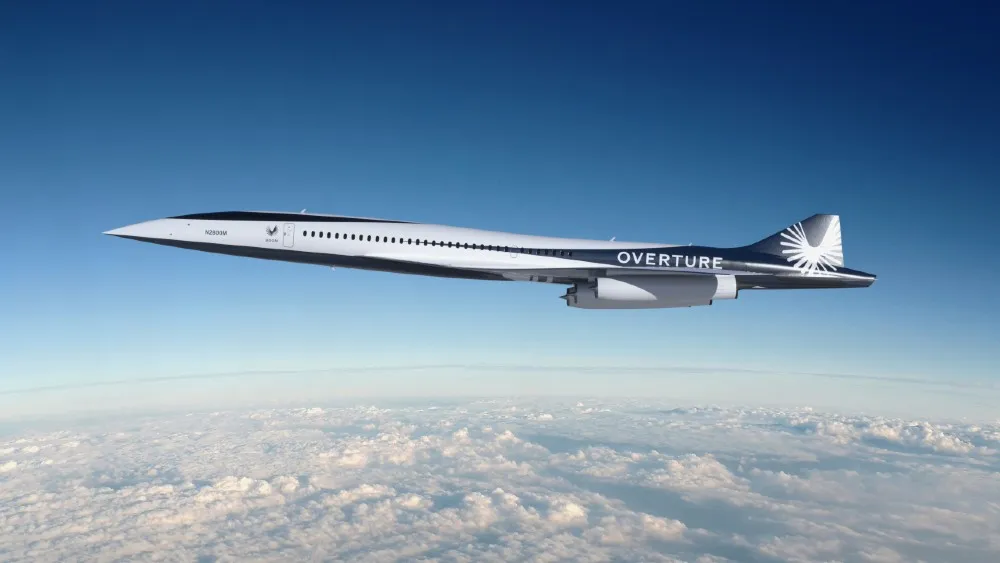
A new era of commercial aviation could soon become reality as the Federal Aviation Administration (FAA) moves to lift the FAA supersonic flight ban. If approved, the proposal would pave the way for next-generation aircraft capable of flying faster than the speed of sound across the continental United States, dramatically reducing travel times and transforming the future of air travel.
The proposed regulations could become law by mid-2027, marking one of the most significant changes to aviation policy since the retirement of the Concorde.
Why the FAA Banned Supersonic Flight
The FAA supersonic flight ban has been in place since the early 1970s.
The restriction was introduced because aircraft exceeding Mach 1—approximately 770 mph (1,239 km/h)—produce a powerful sonic boom. These loud shockwaves generated widespread noise complaints and environmental concerns, making routine supersonic flights over populated areas impractical.
Since then, commercial aircraft have been limited to subsonic speeds, typically cruising between 550 and 600 mph.
New Technology Could Eliminate the Sonic Boom Problem
Today’s aerospace industry believes the challenges that led to the original ban can finally be overcome.
Under the FAA’s proposal, manufacturers would be required to meet new noise-based certification standards for supersonic aircraft rather than simply adhering to a speed restriction.
One of the most promising technologies involves Mach Cutoff, an advanced flight technique that uses aircraft design, altitude, speed, and atmospheric conditions to redirect the sonic boom upward into the atmosphere before it reaches the ground.
If successful, passengers could enjoy supersonic travel while communities below experience little or no disruptive noise.
New Rules Expected by 2027
The FAA intends to introduce additional regulations later this year covering:
- Landing noise standards
- Takeoff noise standards
- Operational requirements for supersonic aircraft
- Certification procedures for future commercial fleets
The agency expects the complete regulatory framework to be finalized by mid-2027, officially opening the door for commercial supersonic operations over the United States.
The FAA is also working alongside international aviation authorities to create harmonized standards for future global supersonic routes.
Boom Supersonic Leads the Race
Among the companies expected to benefit most is Boom Supersonic.
Its flagship aircraft, the Boom Overture, is designed to cruise at Mach 1.7, nearly twice the speed of today’s commercial airliners.
The aircraft has already secured orders from major airlines including:
- United Airlines
- American Airlines
Boom also achieved a significant milestone in 2025 when its XB-1 demonstrator aircraft successfully broke the sound barrier during flight testing.
If certification progresses as planned, Overture could become the first commercial supersonic airliner of the modern era.
Spike Aerospace Is Pursuing Quiet Supersonic Travel
Another major contender is Spike Aerospace, developer of the S-512 Diplomat.
Unlike previous supersonic aircraft, the S-512 has been engineered specifically to minimize sonic boom intensity, making it well suited for future overland operations.
The company projects flight times such as:
- New York to Paris in under four hours
- Significantly reduced transcontinental travel times
- Faster premium business aviation services
Its quiet supersonic technology aligns closely with the FAA’s evolving regulatory vision.
What Faster Air Travel Could Mean
If the proposal is approved, commercial aviation could experience its biggest transformation in decades.
Potential benefits include:
- Dramatically shorter domestic and international flights
- Increased efficiency for business travelers
- Faster premium commercial services
- New opportunities for private aviation
- Greater innovation across aerospace manufacturing
For travelers, routes that currently require six or seven hours could eventually be completed in nearly half the time.
A New Chapter After Concorde
Since the retirement of Concorde in 2003, supersonic passenger travel has remained a dream rather than a commercial reality.
The FAA’s proposal signals that dream may soon return.
Combined with advances in aircraft design, sustainable propulsion systems, noise reduction technologies, and growing airline investment, the next generation of supersonic aircraft could redefine long-distance travel for decades to come.
If everything proceeds according to schedule, the skies over America may once again welcome aircraft traveling faster than the speed of sound—this time with far less noise and far greater efficiency.