
How Ultra-Long-Range Jet Aviation Is Redefining Global Luxury Travel
For decades, ultra-high-net-worth travellers viewed private aviation through a purely functional lens. A tool to bypass commercial terminal friction, streamline complex itineraries, and reclaim valuable hours. Today, that paradigm has shifted entirely. High aviation has transformed from a mere convenience into a sanctuary in its own right. As a new generation of ultra-long-range business jets takes to the skies, the traditional boundary between transcontinental transit and elite hospitality has dissolved.
“In a hyper-connected world, true extravagance is no longer defined by abundance, but by silence, space, and pristine physical restoration.”
1. The Ultra-Long-Range Vanguard
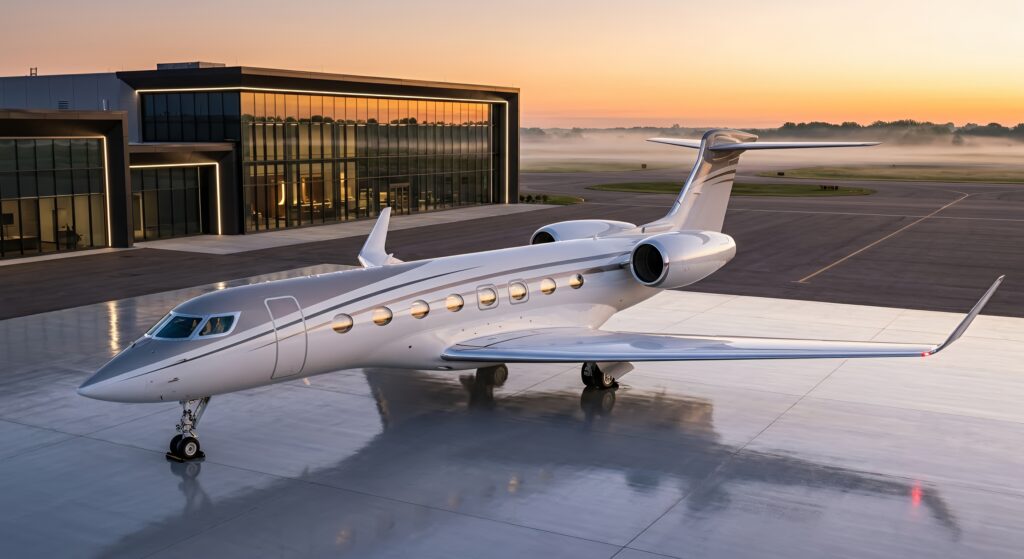
At the epicenter of this shift is a flagship fleet of long-range business aircraft engineered to cross oceans and continents without interruption. Aircraft like the Gulf stream G700 and the Bombardier Global 8000 are pushing range, speed, and cabin engineering into unprecedented territory.
Cruising at speeds near Mach 0.90, these flagships connect distant city-pairs such as London to Buenos Aires or Dubai to Los Angeles on non-stop routes. Yet the true technological breakthrough lies not in speed alone, but in cabin physiology:
Ultra-Low Altitude Pressure: While commercial cabins press to 6,000 – 8,000 feet, aircraft like the G700 maintain cabin altitude as low as 2,916 feet while cruising at 41,000 feet. Lower pressure dramatically reduces physical exhaustion, leaving passengers energized upon arrival.
Circadian Lighting & Pure Air: Intelligently calibrated lighting systems mirror the natural sunlight patterns of the destination city, smoothing time-zone transitions. Simultaneously, 100% fresh, plasma-ionized air circulates throughout the cabin every two minutes.
Acoustic Dampening: Whisper-quiet acoustic insulation reduces ambient engine noise, allowing for effortless conversation, focused work, or deep sleep in private master suites.
2. “Soundscape Travel”: The Rise of Silent Escapes
As high-altitude technology eliminates physical fatigue, destination preferences have evolved alongside it. Modern luxury travellers are increasingly bypassing dense, high-traffic hubs in favor of acoustic luxury and hyper-exclusive retreats.
High-net-worth itineraries prioritize secluded destinations accessible only via private landing strips or direct helicopter transfers:
Sub-Zero Sanctuaries in the Arctic: Private fjord estates in Northern Norway or Iceland’s interior, offering private heli-skiing, northern lights viewings, and complete digital isolation.
Acoustic Eco-Resorts in the Atacama: High-altitude desert retreats built around stargazing, silent rammed- earth architecture, and untouched natural salt flats.
Private Island Charters in the Indian Ocean: Outer-atoll sanctuaries in the Seychelles or Maldives that restrict maritime traffic to guarantee absolute privacy and untouched marine waters.
3. Door-to-Key Hospitality
The modern aviation experience relies on a continuous chain of personalized service, guaranteeing fluid luxury from departure to destination:
Bespoke In-Flight Culinary Arts: Menus designed by Michelin-starred culinary teams, specifically crafted for high-altitude flavor perception and paired with rare cellared vintages.
Tarmac-to-Estate Transfers: Direct helicopter boarding from airport tarmacs to private yachts or mountain estates, eliminating ground transit entirely.
Targeted Recovery Protocols: On-demand wellness offerings, including circadian sleep alignment kits and customized IV therapy sessions upon landing.
By combining state-of-the-art aerospace engineering with ultra-exclusive destinations, transcontinental jet- setting has reached a new standard. The journey is no longer a pause between destinations it is where the destination begins.