
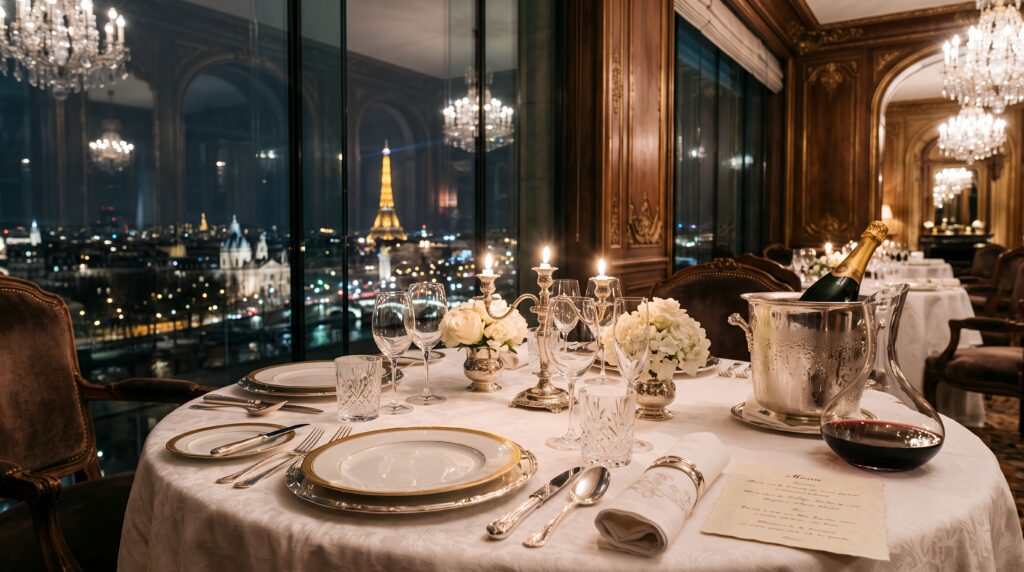
In a world where almost anything can be bought, the rarest thing on the menu is the seat itself.
Imagine a restaurant with no menu to browse, no table to choose and no second sitting to fall back on. Just one table, one evening and one group of guests, planned by one chef from the first course to the last. Reservations vanish in minutes, and some places have been known to turn away almost everyone who calls.
This is the new peak of luxury dining. For decades, a great restaurant meant more of everything: more courses, more waiters, more square footage. The most coveted rooms today have gone the other way. They’ve bet that scarcity is the last luxury worth paying for.
Why One Table Beats a Full Dining Room
A restaurant with a single seating has real advantages over one with a packed floor.
- Total control. When every guest arrives together, the chef can time each course to the minute, with no tables to juggle.
- Real intimacy. A small group creates a private, almost secret feeling that a large room cannot match.
- Built-in scarcity. When there are only a few seats a night, a reservation feels less like a booking and more like winning something.
The result is closer to an event than a meal. It cannot be repeated, rushed or replicated.
The Restaurants Where There’s Only One Table
A handful of restaurants have taken the idea to its limit.
Talula’s Table, Kennett Square, Pennsylvania. This small-town market and restaurant became a legend for its farm table. Only one group a night can dine there, and up to twelve people can fit around the table. Callers were offered a reservation exactly one year later. That year-long wait helped make it a byword for the toughest reservation in the US.
Damon Baehrel, Upstate New York. This private, single-table restaurant is in the chef’s own home. It became so difficult to book that the restaurant’s website has said it hasn’t accepted reservations since March 2014, as it works through a backlog.
Mesa 1, Mexico. There is only one table here, with one sitting per evening. It’s a pure example of the one-table model, where the whole experience is built for a single party.
The Lost Kitchen, Freedom, Maine. Here the barrier isn’t just the seat count but the way you ask for it. One industry analysis named it the world’s most exclusive restaurant because of its unique reservation process, which requires diners to send a postcard to be invited. In an age of one-click booking, a stamp and a hope feels almost romantic.
The Counter: Ten Seats and No Hiding
Not every exclusive restaurant has a single table. Some have a single counter.
In Tokyo, tiny sushi counters have set the global standard for scarcity. Sukiyabashi Jiro, made famous worldwide by a documentary, seats around ten guests. Sushi Saito has long been counted among the hardest tables to book anywhere. At both, the chef prepares each piece in front of you and hands it over at the moment it should be eaten.
The lesson is the same as at the farm tables: the smaller the room, the larger the experience feels. Getting a seat has traditionally meant knowing someone, such as a regular who vouches for you or a concierge with years of goodwill behind them.
Dinner Inside the Kitchen
Another route to exclusivity is to put guests inside the action. Many top hotels and Michelin-starred restaurants now offer a chef’s table in or beside the kitchen. At the Chef’s Table at Brooklyn Fare in New York, guests gather around a communal kitchen counter to watch chef César Ramirez prepare Japanese-inspired dishes built on French technique.
In London, the Table Lumière at Alain Ducasse at The Dorchester gives a small group a view of the brigade at work. Guests often receive off-menu dishes and a chance to talk with the chef directly. For many diners, the kitchen is the real show, and this is the front row.
Dinner as Theatre
At the far edge of the trend, some restaurants have stopped treating a meal as just a meal. Projections, soundscapes, scent and lighting guide guests through a story, with each course acting as a new scene. A single seating makes this possible, because the whole room moves together from the first bite to the last, like an audience in a theatre.
These evenings often cost far more than a traditional tasting menu. But guests who book them rarely talk about what they ate. They talk about how it felt.
What a Seat Is Really Worth
Scarcity creates a market. Booking data shows how far diners will go: one analysis of reservation resale marketplaces found a single booking at a Yountville restaurant valued at £1,562 ($2,086), the highest of any restaurant it looked at, with Noma in Copenhagen second at just under £1,000. That is the price of the right to sit down, before a single course is served.
How People Actually Get In
Securing one of these seats is a skill in itself. The people who manage it tend to use the same strategies:
- Know the release date. Many restaurants open their books on a fixed day each month, and the people who succeed are logged in and ready before it opens.
- Build a relationship. Five-star hotel concierges and premium card services often hold access that ordinary guests can’t reach.
- Get on the list. Private mailing lists and memberships can unlock new dates first.
- Buy out the room. Some restaurants host private nights for a group, guaranteeing the seat and the story.
- Stay flexible. Cancellations happen, and diners who can move at short notice are the ones who get the call.
- Follow the rules exactly. At places like The Lost Kitchen, the process is part of the experience. Do it right, and do it early.
Rules of the Room
The most exclusive restaurants come with an etiquette of their own:
- Arrive on time. With one seating, a late guest delays the entire table.
- Trust the pace. The chef has timed the night to the minute.
- Share dietary needs when you book, never when you sit down.
- Ask before taking photos. Some rooms discourage them.
- Never cancel late. When a restaurant has only a few seats, an empty one is a genuine loss.
The Last Real Luxury
For people who have already eaten everywhere, the menu stopped being the point a long time ago. What they want now is something that can’t be upgraded, bought out or rescheduled: a single table, a single seating and a single night that will never happen quite the same way again.
That’s the quiet truth behind the world’s most sought-after restaurants. The most valuable thing on the menu was never the food. It was the seat.