

Super midsize jets in private aviation are rapidly redefining what today’s jet owners and charter clients expect from business aircraft. Once positioned between light jets and large-cabin aircraft, this segment has evolved into one of the most sought-after categories, delivering transcontinental range, cutting-edge technology, and stand-up cabin comfort—without the operating costs of heavy jets.
From manufacturers to fractional ownership leaders, the industry is making a clear statement: super midsize jets are no longer a compromise—they’re the new benchmark.
The Perfect Balance of Range, Comfort, and Cost
What makes super midsize jets so compelling is their ability to handle demanding missions with ease. Aircraft in this category can fly coast-to-coast routes such as Seattle to Miami or New York to London, while maintaining operating economics far more manageable than large-cabin alternatives.
Industry experts point to the cabin experience as a major factor. With true stand-up cabins, flat floors, generous baggage capacity, and seating for up to eight or nine passengers, these jets are ideal for both business and leisure travel.
New Aircraft Are Redefining the Segment
Manufacturers continue to push the boundaries of what super midsize jets can deliver.
Gulfstream G300
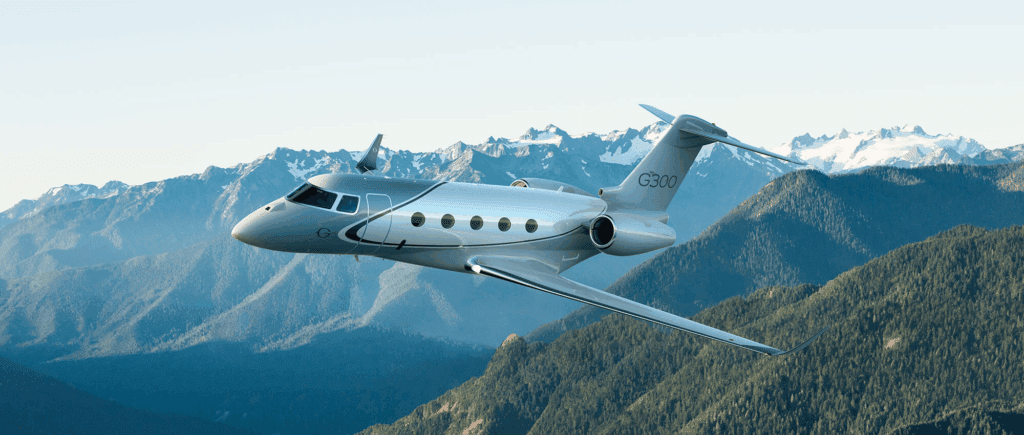
Recently launched as a clean-sheet replacement for the G280, the G300 offers nearly 100 cubic feet more cabin volume, the lowest cabin altitude in its class, and Gulfstream’s advanced Harmony Flight Deck with predictive landing technology and six touchscreen displays.
Bombardier Challenger 3500

A proven favorite, the Challenger 3500 borrows design cues from Bombardier’s flagship Global series, featuring zero-gravity seating, voice-controlled cabin systems, and refined interior acoustics—making it one of the most comfortable aircraft in its class.
Embraer Praetor 600

Known for introducing fly-by-wire controls and turbulence-reduction technology to the segment, the Praetor 600 blends advanced avionics with impressive range and optional inflight service capabilities rarely seen at this size.
Citation Ascend

Expected to enter service in 2026, the Ascend modernizes the popular Longitude platform with upgraded Pratt & Whitney engines, Garmin G5000 avionics, and improved cabin comfort.
Why Owners and Operators Are Investing Heavily
Fleet operators such as Flexjet and NetJets have significantly expanded their super midsize fleets, citing strong demand from younger, experience-driven clients. Many new buyers are skipping light jets altogether, opting instead for aircraft that can fly farther, faster, and more comfortably from day one.
This category now represents one of the strongest growth areas in fractional ownership, charter operations, and private fleet expansion worldwide.
The Next Frontier: Speed and Sustainability
While most super midsize jets cruise around Mach 0.83, innovation is accelerating. New engine technologies may soon push performance closer to Mach 0.9, narrowing the gap with larger jets even further.
One of the most disruptive developments is the Otto Aerospace Phantom 3500. Featuring a laminar-flow, windowless fuselage, ultra-efficient aerodynamics, and operating costs comparable to light jets, the Phantom has already attracted major attention—including a large fleet order from Flexjet. First flight tests are expected later this decade, signaling a bold new chapter for the segment.
The Future of Private Aviation’s Sweet Spot
With continuous innovation, rising demand, and strong investment from manufacturers and operators alike, super midsize jets in private aviation are firmly established as the category to watch. They deliver the rare combination of comfort, capability, efficiency, and forward-thinking design—making them the ideal choice for today’s modern flyer.
In private aviation, bigger is no longer always better. Smarter, more versatile, and more refined is the new standard—and super midsize jets are leading the way.