
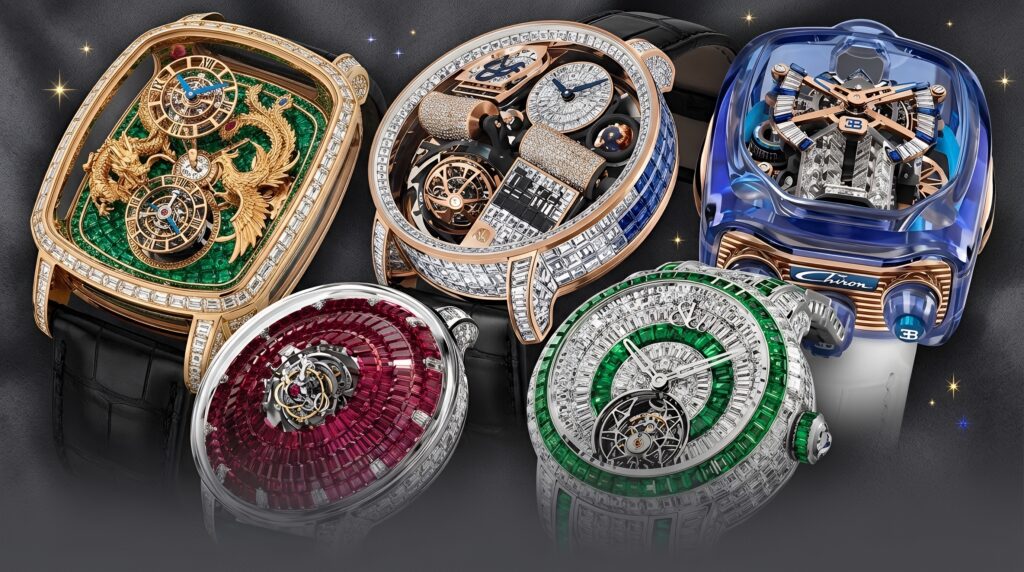
There are accessories that complete an outfit, and then there are those that quietly reveal something about the person wearing them. A luxury watch belongs to the latter category.
Before a word is spoken, a timepiece can offer a glimpse into its owner’s personality, aesthetic preferences, and relationship with craftsmanship. A vintage gold watch may suggest an appreciation for history, while a minimalist steel timepiece might reflect a preference for simplicity. An intricate mechanical watch can reveal a fascination with engineering that goes far beyond appearances.
Yet the most interesting question is not which watch costs the most. It is why certain watches attract us in the first place and what those choices say about the way we see ourselves.
More Than a Measure of Time
In an age when almost every smartphone displays the time, the traditional wristwatch occupies an interesting position. Its original practical purpose remains, but for many luxury buyers, functionality is only part of the appeal.
A mechanical watch contains a miniature world of gears, springs, and carefully assembled components working together to measure time. Its value can lie in the complexity of its movement, the precision of its finishing, the history of its design, or the skill required to create it.
There is also an emotional dimension. A watch might mark a professional achievement, celebrate a significant birthday, or serve as a reminder of someone important. Over time, an object purchased for its appearance can become a personal archive of experiences.
The luxury watch has therefore evolved into something more intimate than a conventional status symbol. It can be an expression of identity a physical object that carries meaning for its owner, even when nobody else notices it.
The Classic Collector: A Respect for Heritage
Consider the person who gravitates towards traditional dress watches, vintage chronographs, or timepieces with decades of history behind their designs.
Their attraction may stem from a fascination with continuity. In a world where trends change rapidly, a well-designed watch can feel reassuringly permanent. Its proportions, dial layout, and mechanical construction may have remained recognisable across generations.
For these enthusiasts, the appeal often lies in the details: a beautifully aged dial, an unusual movement, a reference number with historical significance, or the story of a watchmaker who changed the industry.
They may prefer a timepiece with character over one that simply commands attention. Scratches, faded markings, and signs of wear can even become part of a watch’s identity when they reflect years of genuine use.
For the heritage-minded collector, luxury is not necessarily about owning the newest release. It is about understanding what came before.
The Minimalist: Confidence Without Excess
A clean dial, restrained proportions, and a simple leather strap can communicate a different philosophy.
Minimalist watch enthusiasts often appreciate objects that fulfil their purpose without unnecessary decoration. They may value versatility, balanced design, and the ability to wear the same timepiece with a business suit, a relaxed weekend outfit, or evening attire.
The appeal of a minimalist watch is not that it lacks detail. Quite the opposite: its simplicity leaves little room for poor proportions or careless finishing. Every element must feel deliberate.
This aesthetic also reflects a broader idea within contemporary luxury: that refinement does not always require obvious displays of wealth.
Sometimes, the most compelling design is the one that does not compete for attention.
The Bold Individualist: A Watch That Refuses to Blend In
Not every collector wants subtlety.
Some are drawn to vivid dial colours, oversized complications, unusual case shapes, skeletonizedmovements, or designs that challenge traditional ideas of what a watch should look like.
These timepieces can function almost like wearable art. They transform an everyday accessory into a conversation starter, inviting curiosity through colour, construction, or unconventional design.
The appeal is often personal rather than conventional. A collector might choose an unusual watch because it reminds them of a favourite artist, reflects their creative profession, or simply makes them happy to look at their wrist.
And that is an important distinction: an unconventional watch does not need to impress everyone to be meaningful.
In a luxury landscape where many buyers recognise the same famous brands, choosing something unexpected can be a way of developing a more individual style.
The Status Seeker: When Recognition Becomes Part of the Appeal
It would be unrealistic to discuss luxury watches without acknowledging status.
Certain brands and models have become widely recognisable symbols of success. Their visibility in popular culture, celebrity circles, business environments, and social media has helped turn specific timepieces into cultural shorthand for achievement and wealth.
A recognisable luxury watch can communicate professional accomplishment or membership in a particular social world. For some owners, this recognition is part of the enjoyment.
There is nothing inherently wrong with appreciating a watch’s reputation. Brand heritage, design consistency, and cultural significance can all be legitimate reasons to buy one.
The question is what happens when recognition becomes the primary motivation.
If a watch is chosen exclusively because other people will admire it, the owner’s satisfaction may depend on reactions that are impossible to control. If the same watch is appreciated for its design, comfort, and personal significance, the pleasure can remain even when nobody notices it.
Perhaps the most interesting form of luxury is not the absence of status, but the freedom to decide how much status matters.
The Independent Thinker: Looking Beyond the Famous Names
Some enthusiasts find their greatest pleasure in discovering watches that are not immediately recognisable.
They may explore independent watchmakers, lesser-known manufactures, unusual complications, or brands with distinctive design philosophies. Instead of beginning with a familiar logo, they begin with a question: What makes this watch interesting?
The answer might be an innovative movement, exceptional hand finishing, an unusual approach to dial construction, or the personality of the person who designed it.
Independent watchmaking is particularly fascinating because it can reveal how many different interpretations of horology exist beyond the industry’s best-known names.
For these collectors, knowledge becomes part of the luxury. Discovering a remarkable watch before it becomes widely celebrated can feel more rewarding than following an established trend.
It is not necessarily about rejecting famous brands. It is about recognising that prestige and creativity are not confined to a handful of familiar names.
The Watch as a Personal Milestone
Perhaps the most revealing watch is not the rarest, most complicated, or most expensive one. It is the one attached to a meaningful moment.
A first serious watch purchased after years of saving can carry more emotional weight than a much more expensive replacement. A family heirloom can preserve memories that no market valuation can capture. A watch received to mark a major achievement can become a reminder of the effort required to reach it.
These associations change how an object is experienced.
The watch becomes connected to a particular chapter of life — a career breakthrough, a new beginning, a journey, or a relationship. Its significance grows through use and memory rather than price alone.
This is where luxury becomes deeply personal. Two people can own identical watches and attach entirely different meanings to them.
One sees a mechanical achievement. Another sees a family connection. A third remembers the moment they finally achieved a long-held ambition.
The object is the same; the story is not.
The New Meaning of Luxury in 2026
The modern watch landscape reflects a broader conversation about individuality, craftsmanship, and personal taste. Industry coverage in 2026 has highlighted the continued appeal of heritage designs alongside expressive styles, while discussions about younger consumers increasingly emphasise individuality and craftsmanship rather than status alone. [Source: Vogue, “The State of Watches in 2026”; WatchPro, “Gen Z Is Reshaping the Watch Industry.”]
This does not mean traditional prestige has disappeared. Established brands and iconic models remain influential. Instead, the idea of what makes a watch desirable is becoming more varied.
For one person, luxury means a precious-metal case and a celebrated name. For another, it means an unusual independent creation, a technically impressive movement, or a vintage watch with a fascinating past.
There is no single correct definition.
The most compelling timepiece may be the one that fits naturally into its owner’s life — not merely the one that attracts the most attention.
So, What Does Your Watch Really Say About You?
Perhaps less than we imagine, and perhaps more than we realise.
A watch cannot tell us everything about a person’s character. A minimalist design does not automatically make someone understated, just as an expensive gold watch does not necessarily indicate a desire to impress others. Personal taste is more complicated than appearances.
But the choices we make can reveal what we value. Do we admire engineering or aesthetics? Heritage or innovation? Recognition or discovery? Practicality or artistic expression?
A watch can become a small, tangible reflection of those preferences.
And perhaps that is why the fascination with horology endures. Beyond the mechanics and materials, watches offer an opportunity to express something personal through an object that can be worn every day and kept for decades.
The Baroque Perspective: Wear What Means Something to You
At Baroque Lifestyle, we believe true sophistication begins with discernment.
It is the ability to recognise quality without being dictated by popularity, appreciate craftsmanship without overlooking individuality, and enjoy beautiful objects without measuring their worth solely by their price.
A remarkable watch does not have to be the rarest in the room. It does not need to dominate an outfit or announce its value from across a table.
Sometimes, its significance lies in a detail only its owner understands.
The most interesting question, then, is not what your watch says to the world.
It is what it says to you.
Baroque Lifestyle — Exploring the stories, craftsmanship, and personal expressions that make luxury timeless.